
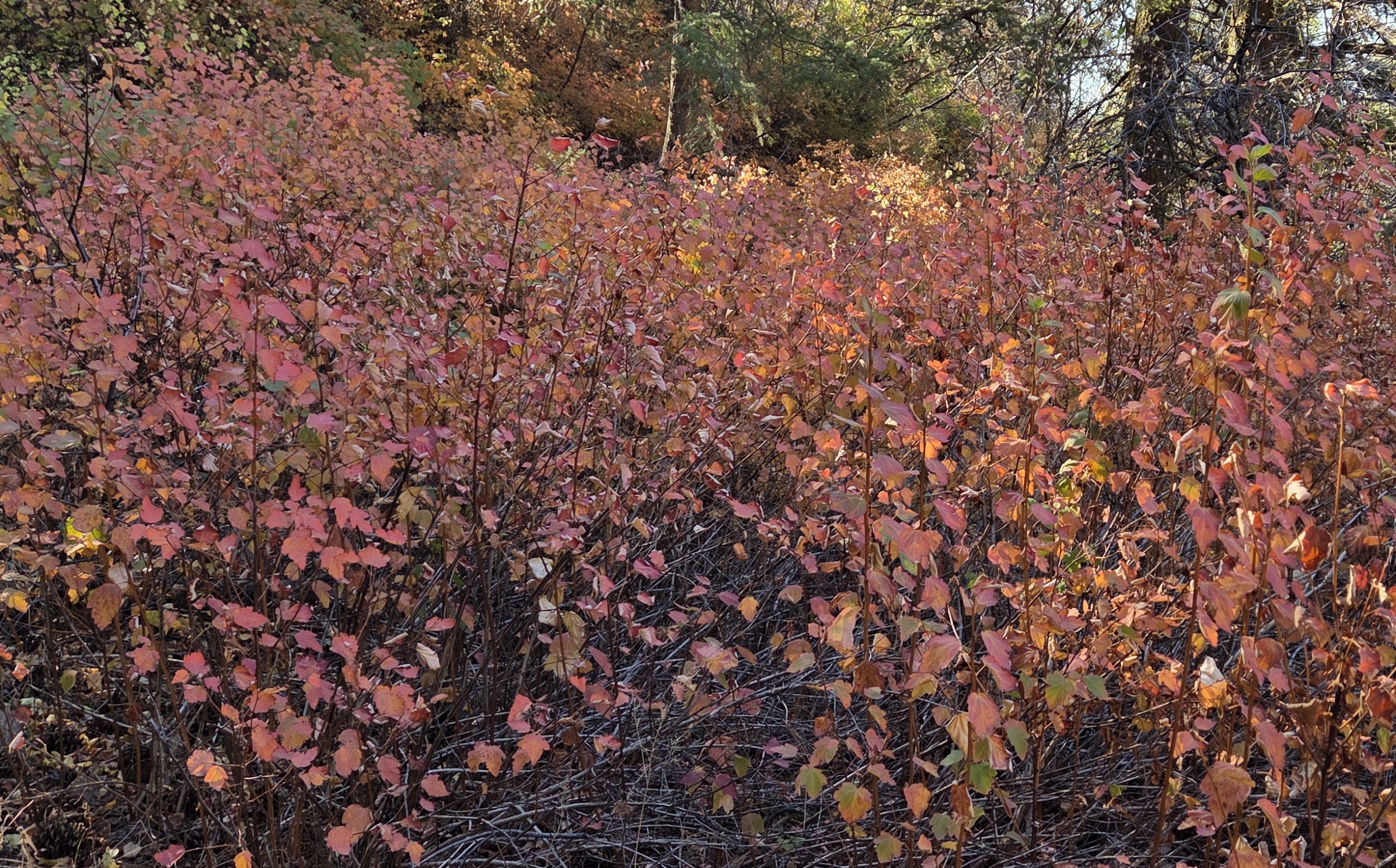
Up hiking this week, I walked into a sea of fall color. Mallow Ninebark is a common shrub in the foothills that really only stands out when it flowers in the spring and turns color in fall.
Have you ever wondered where the yellows, oranges and reds of autumn come from? It turns out that this seasonal display is a result of plants’ amazing ability to track day length. Yes, somehow plants keep time!
Deciduous plants recognize that when days shorten winter is coming and it’s time to conserve energy. That means that photosynthesis must stop. As chlorophyll ebbs away from the leaves, yellow and orange pigments previously hidden beneath the green are gradually revealed.
Next, plants must prepare to shed their leaves for winter. Broad leaves are a hazard that catch the wind and collect snow load. Plants halt the flow of water and nutrients to their leaves and shut off the connection between stem and leaf. In some plants extra sugars are now stranded inside the leaves and these sugars create the brilliant purples and reds of fall.